
Understanding the fashion calendar and seasons: why the industry lives six months ahead of you
Walk into a Zara in mid-July and you'll find wool coats. Walk into the same store in November and there's linen. That's not a merchandising mistake. It's the fashion calendar doing exactly what it was built to do, and once you see it, you can't unsee it.
The system most people picture is simple: four seasons, four collections, shown in spring and fall. What actually runs the industry is a buying calendar that operates months ahead of the weather outside your window. Designers show spring clothes in September. Stores order them in October. Factories cut and sew them through winter. They land on shelves in February, when it's still freezing, and get marked down in June, right when you'd finally want to buy them.
I learned this the hard way on the brand side. I once signed off on a small womenswear capsule in what I thought was "early enough" — early March — only to be told the delivery window I wanted had closed back in January. The fabric was still a swatch. The factory slot was gone. We shipped three months late, into a summer that had already moved on. That single miss cost us a season of margin.
Key Takeaways
- The traditional fashion year runs on four main seasons: Spring/Summer, Fall/Winter, Resort, and Pre-Fall.
- Collections are shown and ordered roughly six months before they reach stores — sometimes more.
- The "3-3-3 rule" is a shorthand for that lead time: three months to make, three months to distribute, three months to sell.
- Fast fashion and monthly drops have fractured the calendar without replacing it.
- If you're a shopper, buy at the start of a season for selection and at the end for price. Never in between.
What the fashion season calendar actually is
Strip away the runway theatrics and the fashion season calendar is a production schedule. A season is a window in which a group of clothes is designed, manufactured, delivered, and sold. That's it. The glamour is a side effect.

The four main seasons
Almost every established brand still organizes around four:
- Spring/Summer (SS) — light fabrics, open footwear, brighter palettes. The collection you'll actually wear from roughly February through July.
- Fall/Winter (FW) — heavier textiles, layering pieces, darker tones. Delivered from around August and sold through the following January.
- Resort (also called Cruise) — originally clothing for customers escaping winter to warm destinations. Now a full commercial collection that often outperforms the main ones because it hangs longest on the floor.
- Pre-Fall — the bridge between summer and winter. In practice, this is where a lot of brands make their real money, because the pieces are transitional and easy to wear.
Notice the pattern. Each name describes a wear window, not a design window. The design work happened months earlier, by people you'll never see on a runway.
Fashion seasons months: the actual timing
Here's the part most explainers skip. The calendar is not synchronized with the weather. It's synchronized with retail.
| Season | Shown on runway | Ordered by buyers | Lands in stores | Markdown begins |
|---|---|---|---|---|
| Spring/Summer | September (prior year) | October | February | June |
| Fall/Winter | February–March | March–April | August | November–December |
| Resort | May–June | June | November | January |
| Pre-Fall | December–January | January | May–June | July |
Read that table twice. Spring/Summer 2026 was designed in 2025, shown in September 2025, and is sitting on shelves right now, in the middle of 2026, being discounted. The clothes you're looking at were conceived when the news cycle was completely different.
What is the 3-3-3 rule in fashion?
The 3-3-3 rule is a working shorthand for how long a garment takes to go from finished design to end of season: three months to produce, three months to distribute and reach stores, and three months of full-price selling before markdowns start. It adds up to a nine-month pipeline, and it's the reason a collection feels "late" the moment it arrives.

It isn't a formal industry law and no one enforces it. It's the practical rhythm that emerged because those three blocks are roughly how long each stage takes when you're working with normal fabric mills, normal shipping, and normal retail floors. Squeeze any one of them and the others break.
Why the three blocks exist
Production takes three months because fabric has to be woven or knitted before it can be cut. You can't skip that. Ordering 40,000 meters of a custom jacquard in April and expecting it in May is not a thing — and yes, I tried once. The mill laughed, politely, and quoted me a September date.
Distribution takes three months because goods move by sea from manufacturing hubs, clear customs, get allocated to distribution centers, and then get trucked to individual stores. Air freight is faster and roughly five to eight times the cost, which is why only the highest-margin pieces ever fly.
Selling takes three months because that's how long a full-price window survives before the next delivery arrives and the pressure to clear space begins. Every retailer has a number in mind for sell-through, and when a style falls behind it, the discount clock starts.
Does the 3-3-3 rule apply to luxury brands?
Partly. Luxury houses often run even longer lead times for their main collections because of specialized ateliers and rare materials, but they also lean harder on exclusive, made-to-order, and pre-order models that sidestep the mass-production timeline. The rule describes the mainstream pipeline, not every pipeline.
Why the calendar stopped making sense
Here's my honest take: the traditional fashion calendar is a nineteenth-century logistics solution trying to serve a twenty-first-century customer, and it's losing.
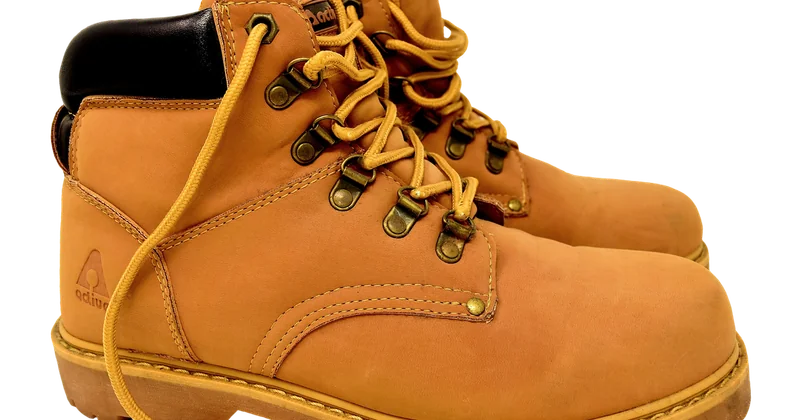
The core problem is that the calendar describes the manufacturer's constraints, not the shopper's behavior. In most of the Northern Hemisphere, the Winter coats hit stores in August, when nobody is thinking about coats, and get discounted in December, when everyone finally is. Spring dresses arrive in February to a still-cold continent. By the time the weather cooperates, the good sizes are gone and the markdown rack is already forming.
I've watched this from both sides. As a customer, I've bought a heavy coat in July at 60% off and worn it for years — great for me, terrible for the brand that trained me to wait. As a buyer-side collaborator, I've sat in meetings where the entire conversation was about when to discount rather than whether the clothes were any good.
The industry's answer has been to add more seasons rather than fix the ones it has. Pre-collections grew into full collections. Resort grew into a commercial juggernaut. And then fast fashion, and later the drop model, collapsed the whole thing into something closer to continuous release.
Fast fashion seasons and the drop model
Fast fashion didn't invent new seasons so much as delete the concept. Instead of four deliveries a year, the biggest players run continuous, small-batch restocking based on what's actually selling that week. A trend spotted on a runway in early September can be in a store by late September. That's not a season. That's a heartbeat.
The trade-off is quality and ethics. A garment designed, produced, and shipped in three weeks is not made to last, and the people making it are working to a schedule no one should defend. I won't pretend there's a clean answer here. There isn't.
The drop model — limited releases, announced in advance, sold out in minutes — borrowed the scarcity mechanics of streetwear and applied them everywhere. It works commercially. It also means "season" is now a marketing decision rather than a production one.
What is going out of style in 2026?
Two things are fading fast: the rigid four-season structure itself, and the ultra-fast micro-trend cycle it produced.
The four-season model is being quietly abandoned by mid-size brands that can't afford to guess six months ahead. They're moving to fewer, more focused deliveries with shorter lead times and more in-season restocking — closer to the fast-fashion rhythm but without the disposable quality. It's a pragmatic retreat, not an ideology.
The other casualty is the three-week trend cycle. After years of churning through micro-trends faster than anyone could wear them, the appetite has cooled. Shoppers got tired of buying things that were embarrassing by the following month. What's replacing it looks a lot more like wardrobe building — fewer pieces, longer wear, and a genuine willingness to pay for construction rather than novelty. I've felt this shift in my own buying: I now consider a coat's stitching before its color.
The capsule, and why it matters
A capsule wardrobe is a small set of pieces that all work together. It isn't new as a concept, but it's the natural consumer response to a calendar that no longer delivers what people want. If you can't trust the season to give you something weather-appropriate, you stop shopping by season and start shopping by function.
That single behavioral change is what's really stressing the old system. The calendar assumes you buy seasonally. More and more of you don't.
What makes a woman look wealthy?
Contrary to the marketing, it isn't logos. It's fit, fabric, and restraint — and all three are consequences of buying outside the seasonal churn.
Fit matters first because a garment altered to your body reads as considered, while an expensive piece that's slightly wrong reads as borrowed. Fabric matters second: natural fibers drape, breathe, and hold shape across years, while blends that photograph well start to pill and lose structure within a season. Restraint matters most of all — a coherent palette and silhouette makes an entire outfit look intentional, which is the actual signal of wealth. Not "I bought this." Rather, "I know who I am."
Here's the quiet irony: the people who look most put-together are usually the ones least affected by the fashion calendar. They buy off-season, at the start of a season for selection and the end for price, and they keep pieces long enough that the question of trend never comes up. Let me put it plainly:
- Buy the coat in July.
- Buy the linen in September.
- Ignore the runway. It's showing you weather you won't have for six months.
The fashion calendar is a fascinating machine, and it's a machine that was built for a world that no longer exists. You can either spend your life fighting it or learn its timing and use it. The second option is cheaper, and it's the one I'd pick.
So the next time you see a wool coat in July, don't dismiss the store. Ask yourself who it was made for, and when they were supposed to wear it. The answer tells you almost everything about how the industry thinks — and how much of it you can comfortably ignore.