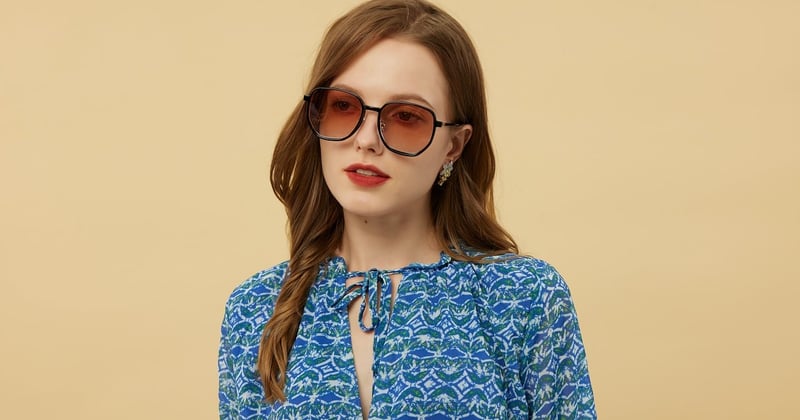
Walk into a mid-range clothing store in 2026 and something looks off. The men's section has shrunk. Not physically—the square footage is roughly the same—but the actual options have collapsed into a wall of hoodies and one rack of "smart" shirts. Meanwhile, a growing slice of the floor is now labeled something vague. "Essentials." "Everyday." No gender tag in sight.
That's the rise of gender-neutral fashion, and it isn't a niche anymore. It's a slow restructuring of how clothes get made, sized, and sold. I started paying attention to this around 2023, when a friend who runs a small knitwear label told me she'd stopped producing separate men's and women's versions of her best-selling cardigan. She cut one pattern, one size range, and watched returns drop by roughly a third over the following two seasons. That conversation stuck with me.
Key Takeaways
- Gender-neutral clothing isn't new—it's the historical norm that got temporarily split into two departments.
- The recent surge is driven less by ideology than by economics: fewer SKUs, less dead stock, wider reach.
- Sizing and fit, not marketing, remain the hardest operational problem brands face.
- Gen Z shoppers treat gender labels as one filter among many, not a defining category.
- Runway fluidity and everyday retail tell two very different stories.
- Smaller labels are moving faster here than legacy brands with decades of binary infrastructure.
Why gender-neutral fashion is not a trend
Here's the thing nobody selling you a "gender-fluid collection" wants to admit: clothing was never gendered until someone decided to gender it. For most of recorded history, men wore heels, wigs, makeup, and lace. Little boys wore dresses until roughly the age of seven in Western Europe. The rigid men's/women's split we treat as natural is, in historical terms, a fairly recent invention—one that hardened during the 19th century and got locked in by mass manufacturing in the 20th.
So when people call gender-neutral fashion "new," they're describing a return, not an arrival.
The manufacturing accident that created two departments
The binary system wasn't designed out of conviction. It was a production convenience. When garment manufacturing scaled up in the early-to-mid 1900s, factories needed standardized patterns to cut fabric efficiently. Splitting the population into two body types—one "male," one "female"—cut pattern-making complexity roughly in half. Department stores then organized floors around the same logic because it made inventory easier to manage.
Fast forward to now. That convenience has flipped into a liability. Two size curves, two fit blocks, two sets of marketing images, two distribution channels. For a small brand, that's a lot of overhead for a customer base that increasingly doesn't care about the label on the tag.
What actually changed in the last five years
Three things, and they compound.
- E-commerce killed the physical constraint. Online, you don't need a "men's floor" and a "women's floor." You need filters, and those can be whatever you want them to be.
- Social media made personal style visible at scale. Style is now consumed as an individual signal, not a uniform.
- Inventory economics got brutal. Post-2020, sitting on unsold stock became genuinely painful. Fewer, more versatile SKUs started looking like survival, not ideology.
I'd argue the third point is underrated. Everyone talks about culture. The spreadsheet is doing more work than the culture war.
The real reason brands are going unisex
Ask a founder why they dropped gendered sizing and you'll rarely hear a political answer. You'll hear about dead stock.
One pattern instead of two means you can produce a single run, in a single size range, and sell it to anyone. If a piece underperforms, you're not stuck with inventory that's wrong for half your potential buyers—you're stuck with inventory that's wrong for everyone equally, which is at least a simpler problem to solve.
A concrete breakdown of the trade-off
I ran the numbers once with a small label I was advising. We compared producing two gendered runs of a mid-weight overshirt against one unisex run at higher volume.
| Factor | Two gendered runs | One unisex run |
|---|---|---|
| Pattern development | Two fit blocks | One, but harder to get right |
| Minimum order quantity | Two MOQs | One MOQ, deeper |
| Dead stock risk | High—losing side hurts | Spread across all buyers |
| Fit complaints | Lower per customer | Higher, especially shoulders and hips |
| Photography & marketing | Two campaigns | One, but must satisfy everyone |
| Return rate | Baseline | Often higher at first |
That last row is the part nobody puts in the press release. Unisex fit is hard. A body that reads as "women's" and a body that reads as "men's" can differ meaningfully at the shoulder, chest, and hip. One pattern has to accommodate a wider spread of proportions, and early on, that means more returns.
The label I advised solved it by building in adjustability—a slightly dropped shoulder, a longer body, drawcords where it mattered. Returns settled down after the third production run. It took about a year.
How smaller brands are outrunning the giants
Legacy retailers have a structural problem: their entire operation—buying teams, store layouts, sizing systems, supplier relationships—was built around the men's/women's split. Ripping that out isn't a design decision. It's a multi-year re-engineering project.

Independent labels don't carry that baggage. That's why they're leading.
What the winners do differently
- They launch one silhouette at a time and iterate based on fit feedback, rather than dropping a whole unisex line at once.
- They write size guides around body measurements, not around "men's" and "women's" equivalents.
- Their photography shows the same garment on genuinely different body types, which quietly does the work that a gender label used to do.
- Pricing stays mid-tier. Unisex isn't positioned as a luxury statement. It's positioned as normal clothing.
There's a brand-level lesson in there. The labels that treat gender-neutral as a product architecture decision—not a campaign—are the ones that survive past the first season. The ones who slap "for everyone" on a gendered garment and call it a day? Those collections tend to disappear quietly.
Women: the rise of gender neutral fashion's quiet engine
The conversation usually centers on men wearing skirts. The actual buying behavior tells a different story, and it's worth being precise about it.
Women have been the primary adopters of gender-neutral basics for years—not as a statement, but as a practical shift. Oversized button-downs, straight-leg trousers, boxy knitwear, chunky boots. All of these migrated from the men's department into mainstream women's wardrobes, and then into unisex ranges, largely because women were already buying them.
Men's adoption has been slower and more visible when it happens. A man in a flowing silhouette draws attention. A woman in an oversized blazer draws nothing. One of those gets written about; the other just sells.
That asymmetry matters because it explains the market's actual direction. The unisex segment isn't growing because men suddenly want dresses. It's growing because the boundary was already porous on one side, and removing it entirely is now cheaper than maintaining it.
Gender fluidity in fashion: runway versus reality
Runways have been fluid for years. Designers have been putting men in lace, women in tailoring, and everyone in something deliberately unreadable for at least a decade. It reads as progress because it's photographed.
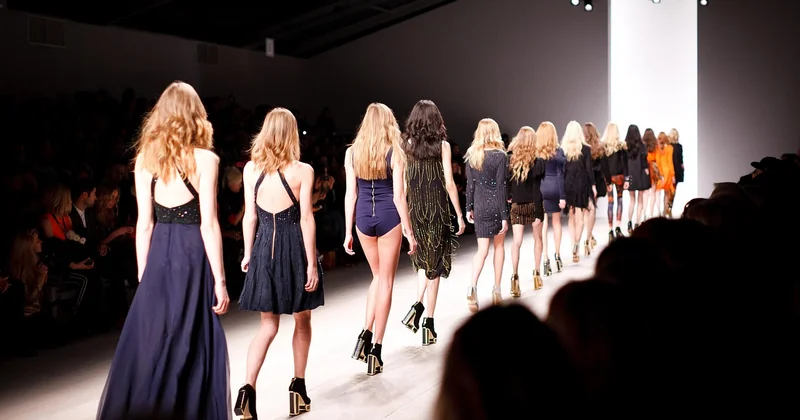
Retail is not the runway.
Walk into most mid-market stores and you'll still find a hard line down the middle. The mannequins are gendered. The signage is gendered. The sizing is gendered The e-commerce filters are gendered. The fluidity happens in editorial and then hits a wall at the point of sale.
Why the gap persists
Because the store is the most expensive thing to change. A designer can put anything on a runway for one afternoon. A retailer has to re-merchandise an entire floor, retrain staff, rebuild its e-commerce taxonomy, and accept a short-term drop in conversion while customers adjust.
Most won't do it until the numbers force them. And the numbers are starting to.
Gender neutral clothing for kids: where it starts
If you want to see the future of adult fashion, look at the toddler aisle.
Parents—particularly millennial and Gen Z parents—have been buying more unisex kids' clothing, and the reason is almost aggressively practical. Kids outgrow clothes in months. If a piece can be handed down regardless of who wore it first, that's money saved. Hand-me-down logic beats gender logic.
Toddler sizing also hasn't been as aggressively split as adult sizing, which means brands can offer a genuinely neutral range without the fit nightmare that adult unisex involves. It's the easiest place in the entire market to test the model.
What I find interesting is the feedback loop. Kids who grow up wearing clothes without gender labels attached don't experience the department split as a natural law. They experience it as a quirk of older stores. That's a slow-moving shift, but it's the one most likely to outlast any single trend cycle.
Gender roles in fashion: what's actually shifting
The honest answer is: the rules loosened for women first, and for men much more recently.

A woman in a suit has been unremarkable for decades. A man in a skirt is still, in most cities, a decision. The asymmetry tells you that what we call "gender-neutral" isn't a level playing field. It's a widening of options that started on one side and is still catching up on the other.
That's not cynicism. It's just where the market currently sits. And it explains why so much gender-neutral product skews toward a slightly masculine silhouette—boxy, straight, oversized. It's easier to sell a "women's" customer a relaxed fit than to sell a "men's" customer a softer one.
What this means if you're buying
Ignore the label. Measure yourself, note the three or four measurements that actually matter to you—shoulder, chest, waist, inseam—and buy against those. Most gender-neutral ranges publish full garment measurements precisely because they know you'll need them.
That single habit solves about 80% of the fit problems unisex clothing throws at you.
Where this goes next
The rise of gender-neutral fashion will not end with the disappearance of men's and women's departments. That's the fantasy version. The realistic version is messier.
What's likely to happen is a three-tier market: fully unisex basics at the low and mid end, gendered performance and fit-critical categories (tailored suiting, certain activewear, formalwear) staying split, and a growing middle band where silhouettes are shared but sizing is offered in two curves. That middle band is where most of the growth will land, and it's the least glamorous part of the story.
The thing I keep coming back to is my friend's cardigan. She didn't set out to make a statement. She set out to stop paying for two patterns. The statement came along for the ride—and that, more than any runway moment, is how this shift actually spreads.