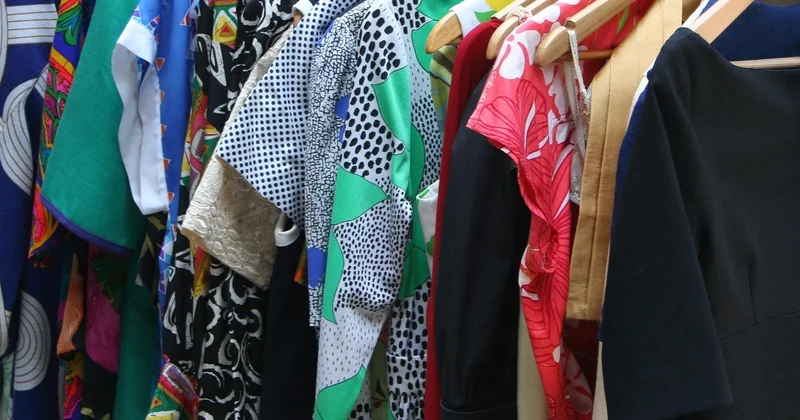
Most women I know own over a hundred garments and still hear themselves say "I have nothing to wear" at 7:40 on a Tuesday morning. I know this because I said it for years, standing in front of a closet packed so tight I had to wrestle hangers apart just to reach a shirt I never actually liked.
The problem was never a lack of clothes. It was a lack of essential wardrobe pieces — the small set of items that actually work together, that you reach for without thinking, that survive a change of season, a change of job, a change of body. Everything else was noise I paid for.
So here is how I rebuilt mine: not another generic list of twenty-five items, but the criteria that decide which pieces earn their place, how I audit what's already hanging there, and the mistakes that cost me far more than they should have.
Key takeaways
- An essential wardrobe is defined by how pieces combine, not by how many you own. Twenty well-chosen items beat eighty random ones.
- Rentability per wear is the honest test: cost divided by the number of times you actually wear it.
- Fit beats price almost every time — a mid-range item altered to your body outperforms a designer piece that hangs wrong.
- Neutral colors for the foundation, personality for accents, so everything talks to everything else.
- Two rounds of decluttering, six months apart, reveal the true essentials — not one brutal purge.
Essential wardrobe pieces that actually work (and why most lists get it wrong)
Open any list of wardrobe essentials and you'll find the same items shuffled into different orders: the white shirt, the dark jeans, the little black dress, the blazer, the classic trench. They're not wrong. They're just incomplete, because they tell you what to buy and never how to decide whether a specific piece deserves your money.
That gap is where the frustration lives. You buy the white shirt from the list, it wrinkles into a mess by 10 a.m., and you conclude that essentials are a myth. The item wasn't the problem. The criteria were missing.
The three tests every piece must pass
Before anything enters your closet, run it through these:
- The combination test. Can you name at least three existing pieces it works with, right now, without buying anything new? If you can't, it's an orphan, and orphans sit unworn.
- The wearability threshold. Will you wear it at least fifteen times a year? That single number separates a real essential from an impulse buy dressed up as one.
- Does it fit today, not the version of you from two sizes ago.
I started applying the combination test about four years ago, and it killed roughly half of my wishlist. Painful, then liberating. That leather jacket I obsessed over for weeks? It matched exactly one outfit I owned. It stayed in the store, and I've never once regretted it.
Why neutral foundations matter more than any single piece
Here's the thing nobody explains clearly enough: essentials aren't individual items, they're a system. A system needs a shared language, and in clothing that language is color and tone. Build your foundation in two or three neutrals that genuinely flatter you — navy and cream, black and grey, camel and white — and suddenly a small number of garments produces a large number of outfits.
Get this wrong and even a beautiful closet becomes useless. Get it right and twenty pieces generate combinations you'd never have predicted on paper.
The core list, category by category
Rather than a number pulled from thin air, think in ranges per category. Exact counts depend on your climate, your work, and how often you do laundry — three variables that generic lists ignore completely.
Tops and shirts
Three to five quality tops carry an enormous share of your outfits. Aim for a mix: one crisp button-down that holds its shape after a long day, two everyday tees in heavier cotton that won't go transparent in sunlight, one knit that layers without adding bulk. Look at the fabric weight and stitch density, not the label. A thicker cotton tee at a modest price outlasts a flimsy branded one every single time.
Bottoms
Two to three pairs, and here I'll be blunt: buy the ones that fit your actual hips and waist, then pay a tailor. Hemming and taking in a waistband costs very little and transforms how a garment reads on you. I spent years buying cheap jeans that fit "well enough" instead of spending slightly more and altering them properly. That was a mistake, and an expensive one repeated across a decade.
Outerwear and shoes
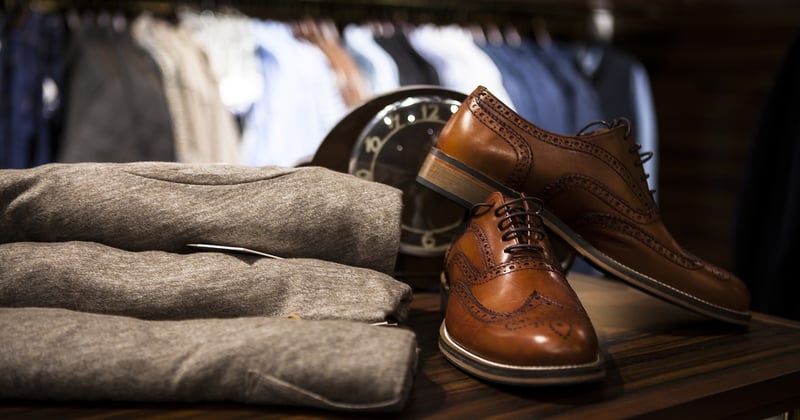
Outerwear does more visible work than anything else in your closet because it's the layer people actually see. One structured coat, one relaxed jacket, one weatherproof option covers nearly every situation. Shoes follow the same logic: a clean pair of leather sneakers, a low heel or flat you can genuinely walk in, and one pair of boots. That's four pairs handling almost everything.
| Category | How many | What to prioritise | Where budgets leak |
|---|---|---|---|
| Tops | 3–5 | Fabric weight, neckline that suits you | Trendy cuts you wear twice |
| Bottoms | 2–3 | Fit at the waist and hip, then alter | Cheap denim that loses shape |
| Outerwear | 2–3 | Structure, lining, closure quality | Fast-fashion coats every autumn |
| Shoes | 3–4 | Comfort you can walk in all day | Heels worn once a season |
| One dress or jumpsuit | 1–2 | Versatility across occasions | Occasion pieces bought for one event |
What a minimalist wardrobe actually looks like in practice
Minimalism gets sold as an aesthetic, but the useful version is a method. It's about knowing your number: the point at which adding another garment stops making your mornings easier.

For me that number sits around thirty-five items in total, seasonally adjusted. I know this because I counted, twice, six months apart — and the second count was the honest one. The first purge was emotionally driven; I got rid of things I resented rather than things I never wore. Six months later, the pile of "never touched in a full season" was completely different.
The two-round audit
Round one: pull out everything you haven't worn in the past twelve months. Don't decide yet — just isolate it. Round two, six months later: whatever in that pile still hasn't been worn goes. This method takes patience, and it works far better than a single dramatic clear-out that you reverse within a month.
The cost-per-wear rule
Divide the price by how many times you realistically wear something. A coat at a higher price worn a hundred times costs far less per outing than a cheap top worn three times. I track this loosely in a notes app — not obsessively, just enough to catch myself before repeating old patterns. The results were humbling: my "affordable" impulse purchases had the worst cost per wear of anything I owned.
The mistakes that cost me the most
Nobody writes about the failures, so here are mine, in the order I made them.
- Buying for an imaginary life. I owned heels and cocktail dresses for events I attended roughly never.
- Chasing sales instead of fit. A discount on something that doesn't suit you is a full-price mistake.
- Ignoring my climate. Lightweight pieces that made sense in a warm city were useless after I moved somewhere with real winters.
- Replacing rather than repairing. A good tailor extended the life of several pieces I'd written off.
And the pattern underneath all of them? Buying to feel like a different person, rather than dressing the one who actually shows up every morning.
How to start this week
Don't overhaul everything at once. Pick your most-worn category — for most people it's tops — and audit only that. Apply the combination test to each item, set aside what fails, and replace nothing until you've lived a month with the gaps. The gaps that still bother you after four weeks are your real essentials. The rest were just noise.
The wardrobe you want isn't the biggest one, or the most expensive one. It's the one where every hanger earns its place, and getting dressed takes four minutes instead of forty. That's a far better return than any purchase I've ever made.