You've got the invitation in your hand. "Dress code: smart casual." You read it three times, and it tells you absolutely nothing. Is it a blazer thing? Do you need to wear a tie? Are your nice sneakers acceptable or a disaster? Two hours later you're standing in front of your closet, holding two shirts up to the mirror like a detective comparing fingerprints.
I know that moment well. I once showed up to a work dinner in what I thought was perfect smart casual, only to realize I'd misread the room entirely. Nobody said anything, but the photo from that night still makes me wince, and I've used it as a cautionary tale ever since. Dressing smart casual isn't about owning expensive clothes. It's about reading the occasion and knowing the handful of rules that separate "put-together" from "didn't try."
That's what this is about: how to dress smart casual for any occasion, without overthinking it and without buying a whole new wardrobe.
Key Takeaways
- Smart casual sits between formal and relaxed. The trick is dressing up one notch from your usual, not two.
- Fit matters more than price. A well-fitting affordable outfit beats an expensive ill-fitting one every time.
- The 3-3-3 rule gives you a fast memory shortcut: it constrains your palette, your textures, and your focus pieces.
- Jeans can work. Dark, clean, well-cut, and undamaged. Light, ripped, or baggy is a hard no.
- Shorts, flip-flops, running shoes, sportswear, and loud logos are the usual disqualifiers.
- When in doubt, go for one focal point and keep everything else quiet.
What smart casual actually means (and why it trips everyone up)
Here's the thing nobody tells you: smart casual isn't a fixed uniform. It's a sliding scale, and the scale moves depending on the venue, the time of day, and the crowd you're about to walk into.
A tech startup's holiday party and a law firm's client dinner can both say "smart casual" on the invite, and the right outfit for each looks nothing like the other. That's why the term feels so slippery. The dress code isn't telling you what to wear. It's telling you what not to wear, and leaving the rest to you.
Practically, smart casual lives in a band between "business formal" and "running errands." You're taking the comfort of casual clothing and sharpening it with one or two polished elements.
The one-notch rule
My best practical rule, learned the hard way: take what you'd normally wear and upgrade one element. One, not three.
If you'd wear jeans and a t-shirt, swap the t-shirt for a crisp button-down. If you'd wear a cotton button-down, add a blazer. If you'd wear a skirt and a plain top, choose one with a tailored structure instead of a soft drape. This single move lands you in smart casual almost every time, and it keeps you from the over-dressed-in-a-room-full-of-casual-people trap.
Which is, for the record, just as awkward as being underdressed. I learned that one the following year, at a boat party where I wore a full suit. On a boat. With people in linen and boat shoes. I spent the entire evening laughing at myself, and I don't recommend it.
What should I wear to a smart casual event?
Start from a simple formula and adjust from there. The safest smart casual outfit is built around one anchor piece that looks intentional, then filled in with clean, neutral basics.
For daytime events like a brunch, a gallery opening, or a garden party:
- A well-cut pair of trousers or dark chinos
- A structured blouse or button-down shirt
- Closed-toe shoes, a simple pair of loafers or neat flats
- One accessory, whether that's a watch, a belt that matches your shoes, or a single piece of jewelry
- An optional layer, a linen blazer or a light cardigan, depending on climate
For evening events, the same skeleton gets slightly sharper. Darker colors, a touch of shine, and shoes that are clean rather than practical. A tailored dark blazer over a simple top can carry an entire outfit on its own.
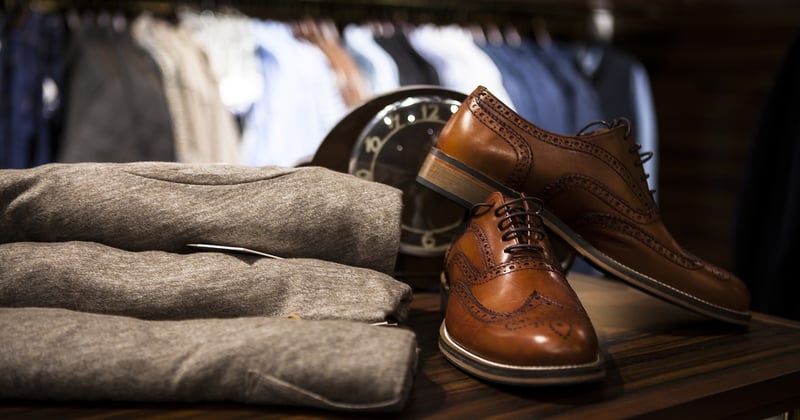
The one detail people forget: your shoes tell the whole story. Shoes are the first thing a sharp eye notices. A cheap outfit with great shoes reads as stylish. An expensive outfit with scuffed, dirty shoes reads as careless.
Adapt by occasion, not just by dress code
Smart casual means something slightly different depending on where you're going. Here's a quick reference for the occasions that come up most often:
| Occasion | The anchor piece | Keep it cautious on |
|---|---|---|
| Work dinner or networking | A blazer or structured jacket | Sneakers, anything too casual |
| Brunch or daytime event | Dark chinos or tailored trousers | Heavy accessories, evening shine |
| Wedding reception (non-formal) | A dress or suit in a solid, rich color | White, jeans, flip-flops |
| Interview or client meeting | A sharp button-down and clean shoes | Rips, loud logos, shorts |
| Evening party or date | Something dark and clean-lined | Head-to-toe casual layers |
Notice the pattern? Every row has exactly one thing doing the heavy lifting. When you try to make three pieces the star of the show, the outfit collapses. One anchor, quiet supporting cast. That's the whole game.
What is the 3-3-3 rule for clothing?
The 3-3-3 rule is a styling shortcut for building a coherent outfit fast, and it's a genuinely useful memory tool once it clicks.
Different stylists phrase it slightly differently, but the version I use is this: no more than 3 colors, around 3 textures or fabric types, and roughly 3 focal elements in a single outfit. The point isn't the numbers being exact. The point is that the numbers force you to actually decide what matters.
Here's how it plays out in practice:
- Colors: pick one base (navy, charcoal, camel), one secondary (white, cream, grey), and one accent (a warm earthy tone or a deep jewel shade). That's it. Three.
- Textures: mix smoother and coarser fabrics so the outfit has depth. A crisp cotton shirt against wool trousers against a suede shoe gives three distinct surfaces that read as intentional.
- Focal points: one piece should be the anchor, one should support it, and one should be quiet. Three roles, no competition between them.
I'll be honest: I didn't understand why this mattered until I tried it. My outfits used to be a stack of individually nice pieces that never added up to a whole. Once I started capping the palette and textures, everything suddenly looked deliberate, even the cheap stuff. Same closet. Different logic.
A concrete example, so it sticks
Let's say you're dressing for a casual evening event. Build it like this:
- Base color: charcoal trousers.
- Secondary color: an off-white button-down shirt.
- Accent color: a single warm olive accessory, either a belt or a scarf.
- Textures: cotton shirt, wool-blend trousers, suede shoes.
- Focal points: the trousers anchor, the shirt supports, the accessory adds one quiet note.
That's it. Five decisions, one outfit, and none of them required a shopping trip.
Does the 3-3-3 rule work for both men and women?
Yes. The numbers don't care about your style category. The only thing that changes is which pieces you're counting. For one person the three focal elements might be a blazer, a pair of loafers, and a watch. For another, they might be a dress, a bag, and a piece of jewelry. The constraint is the same; the pieces are yours.
Can I wear jeans to smart casual?
Yes, with conditions. Jeans are one of the most reliable smart casual pieces in existence, but only the right ones, and this is where most people slide off the cliff.
The criteria that matter:
- Cut: a clean, tailored or straight leg. Nothing too loose, nothing skin-tight.
- Color: dark indigo or black. Light, faded washes read as weekend, not smart casual.
- Condition: no rips, no bleach spots, no frayed hems, no visible distressing. None.
- Finish: no embellishments, no bold stitching, no loud pocket detailing.
If your jeans pass all four, you're good for most smart casual settings. If they fail even one, leave them home.
And if you'd rather not gamble at all, the answer is in your alternatives. Chinos in a darker shade are the safest swap, since they read as more intentional than denim while staying just as comfortable. A pair of tailored trousers pushes you slightly further toward formal, which is fine for evening events but can feel heavy at a daytime brunch. When in doubt, chinos are the middle path that almost never fails.
What is not allowed for smart casual?
This is where people make the visible mistake. There's a fairly short list of items that break the smart casual code almost every time, and once you know them, you can spot a misstep from across the room.
- Shorts. Not for smart casual, no matter how hot it is. If the venue is outdoors in summer, choose lightweight trousers in linen or a breathable cotton blend instead.
- Flip-flops and beach sandals. Footwear with any connection to the beach or the pool disqualifies the outfit instantly. Closed-toe or a clean, leather-style sandal is safe.
- Running shoes and gym sneakers. The ones you actually exercise in. Clean, minimal, leather-style sneakers can work in casual smart settings; performance footwear usually can't.
- Sportswear of any kind. Tracksuits, sweatshirts with athletic branding, hoodies with loud graphics.
- Bold logos and slogans. A small, subtle brand mark is fine. A huge logo plastered across your chest turns an outfit into a billboard.
- Caps and athletic hats. A beanie sometimes reads as casual-cool; a baseball cap rarely belongs in a smart casual setting.
- Anything see-through, extremely short, or that requires constant adjusting. If you can't sit, stand, and move comfortably, it's the wrong choice, no matter how good it looks on the hanger.
The unifying idea behind every one of these: smart casual rewards restraint. Everything that reads as "I'm going to the gym" or "I'm going to the beach" or "I want you to see my logo" is a signal pointing the wrong direction.
When in doubt, do this
You've read all of this, and you're still frozen in front of your closet. It happens.
Then run the checklist out loud: one anchor piece, quiet colors, clean shoes, no sports gear, nothing too short or too tight. If your outfit passes those five tests, you're already dressed correctly for almost any smart casual event on the calendar. You won't be the best-dressed person in the room. You also won't be the one whose photo everyone remembers for the wrong reason, which, honestly, is the whole point of the dress code in the first place.
The real secret isn't memorizing a uniform. It's learning to read the room before you walk into it, and giving yourself one quiet, confident upgrade. That's a skill you keep for life. And it's a much better feeling than standing in front of a mirror, holding up two shirts, at 6:45 on a Friday evening.