You walk out the door at 8am and it's 9°C. By 2pm it's 19°C and you're carrying your coat over one arm, sweating through a knit that seemed like a good idea four hours ago. This happens to me roughly forty times a year, and for a long time I just accepted it as the tax you pay for living somewhere with actual seasons.
It isn't. Transitional dressing is a solvable problem, and the solution has almost nothing to do with buying more clothes. It's about building a small rotation of pieces that work at two temperatures at once, and knowing which combinations to reach for when you check the forecast and see a 10-degree spread between morning and afternoon.
Below is the system I've landed on after years of getting this wrong, plus the specific outfit formulas that hold up from roughly 8°C to 22°C.
Key Takeaways
- Transitional weather isn't a season, it's a temperature band — roughly 8°C to 22°C with a daily swing of 8 degrees or more.
- The 3-3-3 rule gives you nine outfit combinations from nine garments, and it's the fastest way to stop overbuying.
- Layering only works if the middle layer can be removed without ruining the silhouette.
- Fabric weight matters more than fabric type. A light merino beats a heavy cotton every time.
- Some pieces genuinely are on their way out for 2026, and knowing which saves you money.
What "transitional weather" actually means (and why most advice gets it wrong
Most people describe transitional weather as "in-between seasons." That's useless for deciding what to wear. You can't dress for a concept.
Here's a working definition instead: transitional weather is any day where the high and the low differ by 8°C or more, and the low sits between 5°C and 16°C. That covers late March through May, and September through early November in most temperate climates — but it also covers a random mild day in January, and plenty of June mornings that turn into 26°C afternoons.
The temperature band is the useful part. Below 5°C, you need insulation and you dress for the cold, full stop. Above 22°C, you dress for heat and layering becomes a nuisance. Between those two numbers, you're managing a moving target, and the outfit has to be reversible.
The morning/afternoon gap is the real problem
Look at any weather app and the number that matters isn't the high. It's the spread. A day that goes 12°C to 14°C is easy. A day that goes 9°C to 20°C requires a completely different strategy, and the strategy is always the same: build the outfit around what you can take off, not what you can add.
I learned this the hard way. For two autumns I dressed for the afternoon and froze at the bus stop, then flipped to dressing for the morning and spent every lunchtime carrying a jacket I resented. Neither worked, because I was treating the outfit as one fixed thing instead of a stack.
How to dress for transitional weather
The answer is layers, but not the vague version of that advice. Layers only help if each one can be removed independently and the outfit still looks intentional with any combination of them on or off. If removing your cardigan leaves you in a camisole you'd never wear alone, you don't have a layer — you have a garment that only works in one configuration.
The three-layer framework
Every transitional outfit I wear has up to three slots:
- Base layer — a piece you'd happily wear alone in 20°C heat. Cotton tee, fine merino knit, silk blouse, linen shirt.
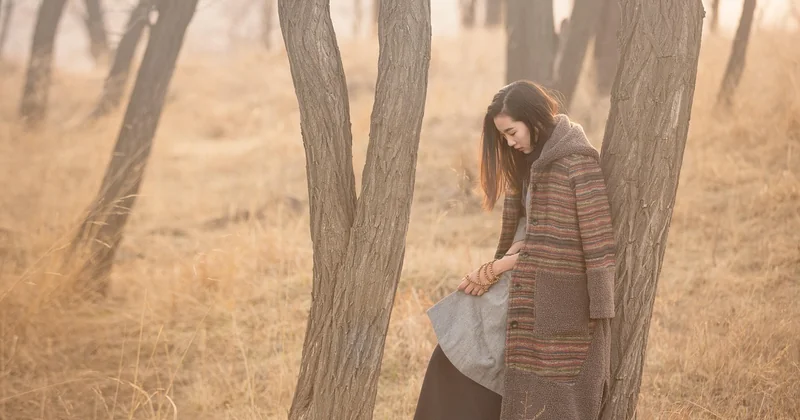
- Mid layer — removable, and it defines the outfit's character. A structured blazer, an overshirt, a light cardigan.
- Outer layer — protection against wind and the 8am chill. Trench, unlined wool coat, denim jacket.
The mistake almost everyone makes is buying mid layers that are too warm. If your mid layer is a heavy cable knit, it can't stay on past 18°C and it's useless as a middle piece. The mid layer should be the lightest thing in the stack, not the heaviest.
What to avoid
Three things consistently wreck transitional outfits, and I've done all of them:
- Wearing a heavy coat over a heavy knit. You have exactly one removal option and you're still too hot.
- Choosing shoes for the morning. Cold feet at 8am are solved by socks. Hot feet at 3pm are not solvable.
- Anything that wrinkles badly in humidity — the afternoon warmth plus a packed train turns a crisp shirt into a mess.
Notice the pattern: every failure comes from optimising for one moment of the day instead of the whole arc of it.
What is the 3-3-3 rule for outfits?
The 3-3-3 rule is a capsule-wardrobe framework: three tops, three bottoms, three pairs of shoes. Multiplied out, that gives you twenty-seven possible combinations from nine garments, and it forces you to pick pieces that already agree with each other.
I started using a version of this two years ago when I realised I owned thirty-one tops and wore the same five. The rule didn't just simplify my mornings — it exposed how much of my wardrobe existed to cover for pieces that didn't actually work.
How to apply it to a transitional wardrobe
For the 8-22°C band, the nine pieces need specific properties:
- Tops: one long-sleeve fine knit, one short-sleeve tee or blouse, one mid-weight overshirt that works open or closed.
- Bottoms: one pair of straight or wide trousers, one midi skirt or relaxed jeans, one tailored option for anything that needs to look deliberate.
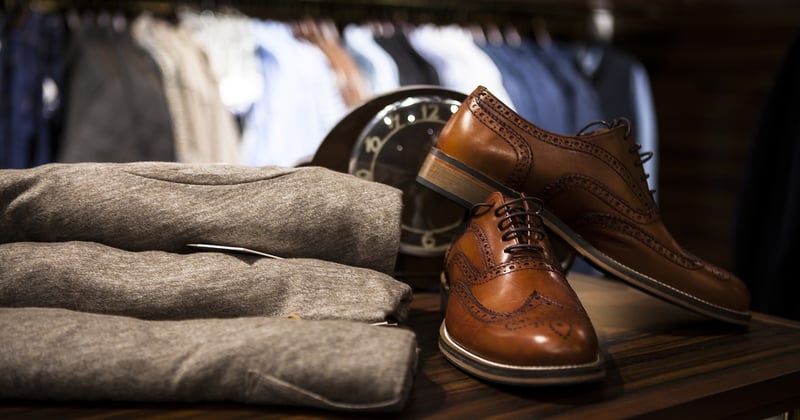
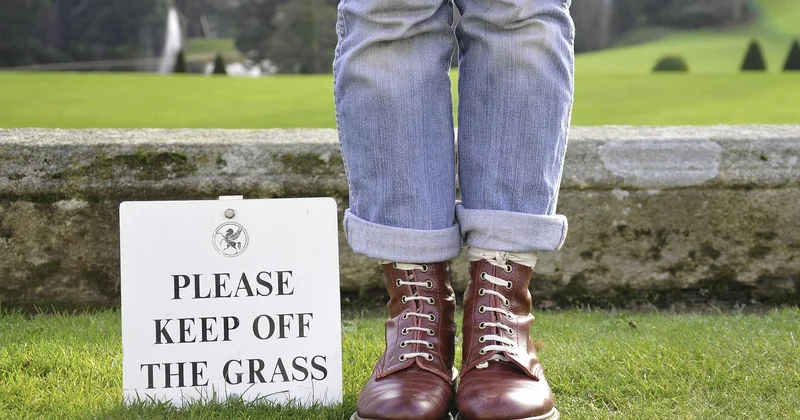
- Shoes: one pair of leather loafers, one pair of ankle boots, one clean sneaker. All three should be wearable without socks in a pinch.
Add your outer layer separately — a trench coat lives outside the count because it comes on and off constantly.
| Weather condition | Layer configuration | Works from |
|---|---|---|
| Overcast, 8-12°C | All three layers on | Morning through late afternoon |
| Bright, 12-17°C | Base + mid, coat carried | Mid-morning to evening |
| Warm, 17-22°C | Base only, coat in bag | Afternoon onward |
| Windy, any temp | Base + outer, skip the mid | All day, better than expected |
| Rain, 10-15°C | Base + mid + water-resistant outer | All day, but swap shoes |
Seasonal outfit ideas for each transition
Here's where the theory turns into actual clothes. I've split these by which direction you're moving through the year, because the two transitions have genuinely different problems.

Winter to spring
The hard part here is that mornings still feel like winter while afternoons feel like April. You need warmth you can shed fast.
- Fine merino turtleneck + straight-leg trousers + unlined wool coat + loafers. The turtleneck covers the cold morning, the coat comes off by noon, and the trousers work at both temperatures.
- White cotton shirt + light grey blazer + dark jeans + ankle boots. Sleeves rolled by 1pm, jacket over the arm by 2pm.
- Long-sleeve striped top + trench coat + midi skirt + sneakers. This one survives rain, wind and a 12-degree swing without a single adjustment.
The piece doing the most work in all three is the coat. An unlined wool coat that weighs almost nothing is worth more than three heavy coats between March and May.
Summer to fall
Going the other direction is easier, because you're layering summer pieces rather than dismantling winter ones. Lightweight fabrics already exist in your wardrobe.
- Silk slip dress + suede ankle boots + denim jacket. The texture contrast between silk and suede is what makes this read as deliberate rather than thrown together.
- Linen shirt + fine knit draped over the shoulders + wide trousers + loafers. The draped knit is a layer you can actually put on properly at 6pm.
- Cotton tee + overshirt + cropped jeans + clean sneakers. The overshirt is the entire outfit's decision point — open it's a light layer, closed it's a jacket.
Play with texture, not just temperature
A slip dress with a chunky cardigan reads as transitional. The same dress with a thin cardigan reads as summer that went wrong. The difference is entirely in the weight contrast between the two pieces. When you're dressing across two seasons, pair pieces whose fabric weights are far apart. Light with heavy, smooth with textured, crisp with soft. It signals intent, and it looks better than any single-temperature outfit you own.
What is going out of style in 2026?
The pieces I'd stop buying are the ones whose entire job was to be a statement. Anything with a logo large enough to be read from across a room has been losing ground for a while, and it's now the fastest way to date an outfit.
Some specifics worth knowing before you spend:
- Skinny jeans. Not gone entirely, but they've moved from default to deliberate choice, and the relaxed cuts work far better for layering anyway.
- Cropped puffer jackets. They clash with everything transitional — too warm for the afternoon, too short to block wind.
- Oversized everything at once. One relaxed piece per outfit is the current sweet spot. Three is a silhouette problem.
- Ultra-thin "fashion" layers. If a cardigan has no weight, it does nothing when the temperature actually drops.
What's holding up instead: unstructured tailoring, heavyweight cotton, fine-gauge knits, and shoes you can walk in for an hour. Notice that all of them happen to be exactly what transitional dressing rewards. That's not a coincidence — the pieces that survive a trend cycle are usually the ones that work in ambiguous conditions.
Building your rotation without buying a new wardrobe
I'll be honest: the first time I tried this, I bought nine new pieces to fill out a 3-3-3 grid, and it was a waste. Four of them didn't pair with anything I already owned, because I'd picked them individually rather than as a set.
The version that worked started from the other end. I laid out what I already had that fit the 8-22°C band, and I only filled the gaps. It took two seasons instead of one purchase, but every piece I added actually got worn — and I stopped doing the thing where you own a full wardrobe and wear the same six things.
Start with the outer layer, because it's the piece you interact with most. An unlined wool coat in a neutral colour, or a proper trench, will do more for your transitional wardrobe than any five tops. Then make sure your mid layer is genuinely light. Then replace the shoes that don't work with bare feet.
Everything else is optional, and most of it is noise.