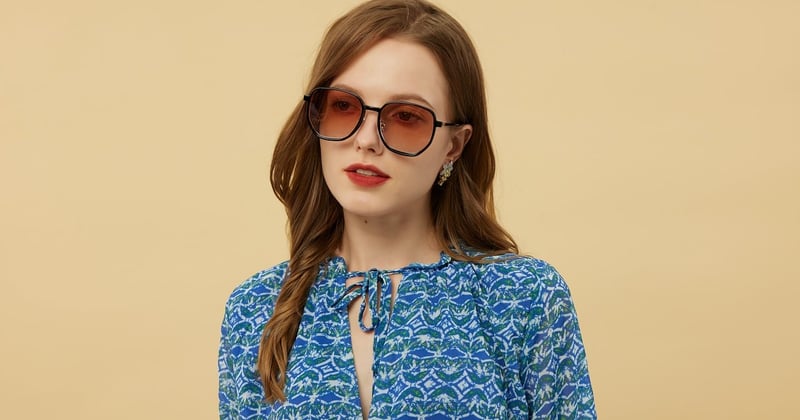
Eighteen months ago, a teenager in Ohio filmed herself trying on a $12 dress in her bedroom. No stylist. No photographer. No magazine. Within a week, that dress was sold out in four countries, and a buyer for a mid-size European retailer was on a call trying to figure out whether to reorder. She had never spoken to anyone in the fashion industry. The industry had already rebuilt itself around her.
That's the part most explainers miss. Social media didn't just give fashion a new advertising channel. It moved the decision-making power from a handful of editors and buyers to an unpredictable, algorithmically mediated crowd, and it did so in less than a decade. If you sell clothing, write about it, or just buy it, understanding how social media influences fashion trends is no longer optional context. It's the mechanism.
Key Takeaways
- Trends used to be decided twice a year by a small group of gatekeepers. Now they emerge weekly from fragmented micro-communities, often before any brand notices.
- Virality follows a predictable pipeline: a small in-group, a sound or format that makes the look copyable, then algorithmic amplification.
- The acceleration isn't neutral. Faster trends mean more production, more waste, and shorter garment lifespans.
- Counter-movements (de-influencing, secondhand resale, "quiet luxury") are growing, partly as a reaction to the churn.
- For brands, the winning strategy shifted from forecasting seasons to reacting to signals in days, not months.
- Regulation is starting to catch up, especially in Europe, but it trails the reality on the ground by years.
How social media influences fashion trends: the pipeline nobody explains
Most articles tell you that Instagram and TikTok "democratized fashion." True, and also useless. Democracy is a result, not a mechanism. The interesting question is how a look travels from one person's phone to a factory order in Vietnam, and the answer has a fairly stable anatomy.
The anatomy of a viral look
It almost never starts broad. A niche community adopts something first: a specific subreddit, a corner of TikTok, a Discord server for a hobby. It could be a way of cuffing jeans, a color nobody has worn in fifteen years, or a jacket silhouette borrowed from a workwear tradition. The community doesn't call it a trend. It's just what they wear.
Then comes the copyable format. This is the step people underestimate. A look spreads fast when it can be reproduced in under a minute with things you already own, and it spreads slowly when it requires tailoring, money, or taste. A "three ways to style one blazer" video outperforms a runway clip every time, because it hands the viewer a set of instructions rather than an aspiration.
Then the algorithm does the rest. Recommendation systems don't need to understand fashion. They just need to notice that a format keeps people watching. Once that happens, the same look gets pushed to millions of feeds, and the trend has effectively left the community that invented it.
Here's the thing: brands usually arrive last. By the time a garment reaches a mainstream retailer's lookbook, the look has already been circulating for months, and the people who created it have moved on. Which is why so much fast-fashion product feels slightly off, like a photocopy of a photocopy.
I watched this happen with a small brand I used to consult for. They spotted a styling format going around in late spring, ordered a production run, and had stock on shelves by autumn. It sold. But the audience that had started it had stopped wearing it in July.
Why the cycle collapsed from seasons to weeks
Traditional fashion ran on two main collections a year, plus pre-collections and resort drops. That rhythm existed because it had to: fabric sourcing, sampling, factory scheduling and shipping all took months. The calendar wasn't a creative choice. It was a physical constraint.
Social platforms removed the constraint on the demand side without removing it on the supply side. A trend can now peak in nine days. A factory still takes weeks to turn around a new style. So the industry did the only thing it could: it started producing smaller runs faster, and it started copying whatever was already selling.
The result is a stretch of the calendar that no buyer I know enjoys. A single fast-fashion retailer can push out dozens of small drops a year, each one a bet on a signal that may already be fading. Multiply that across the sector and you get an enormous volume of garments designed around a trend window of a few weeks.
What is the 3-3-3 rule in fashion?
The 3-3-3 rule is a styling and packing heuristic, not an official industry standard. The common version goes like this: pack three bottoms, three tops and three pairs of shoes for a trip, and those nine items should combine into a full set of outfits without anything being redundant. The point is that each piece must work with the others, which forces you to think in systems rather than in single looks.
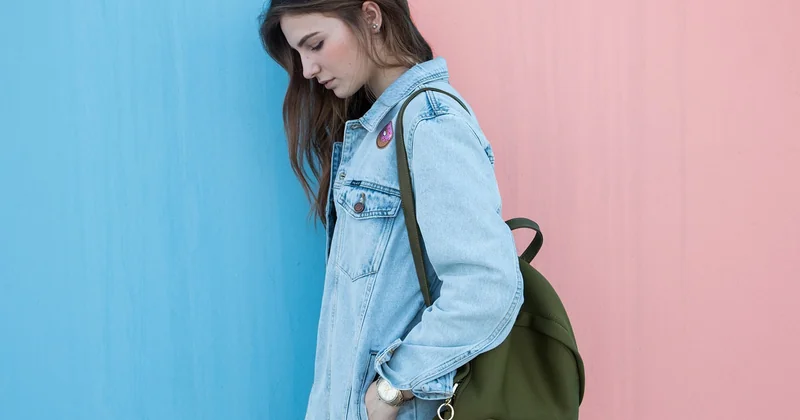
A second version of the rule circulates in wardrobe-building advice: for any new item you buy, you should be able to name three outfits it works with before you spend money on it. If you can't, the piece is a one-outfit purchase, and it will sit unworn. I've used a version of this for my own closet and it's surprisingly effective at killing impulse buys, especially the ones triggered by a video that made a very specific look feel urgent.
What matters for our topic is why this kind of rule became popular. Rules like 3-3-3 are a coping mechanism for a fashion cycle that no longer gives people time to absorb anything. When trends change every fortnight, you need a personal filter, or you end up buying endlessly and wearing a fraction of it. Constraints are how you keep your wardrobe coherent while the feed keeps shouting.
Why is Gen Z fashion so baggy?
Baggy silhouettes have several interacting causes, and none of them is purely aesthetic.

Comfort is the obvious one. Loose clothing is easier to wear for long hours, which matters for a generation that works, studies and socializes in the same clothes. There's also a reaction against the skinny-jeans era that dominated the 2010s: when a silhouette has been mandatory for a decade, the fastest way to signal that you're not part of that era is to invert it completely.
Secondhand supply plays a role that gets overlooked. Thrifted and vintage clothing skews large, because that's how much of the older stock was cut. If you build your wardrobe from resale, you either learn to tailor or you learn to wear volume. Many people chose volume, and the look became a style in its own right.
And then there's the copyability factor. Oversized clothing is forgiving on camera. It works on a range of body types, it photographs well in motion, and it hides fit problems that a tailored garment would expose. Watch any dance-heavy format on a short-video app and you'll see why the silhouette spread: it moves.
What is the 5-5-5 rule for social media?
The 5-5-5 rule for social media is a posting rhythm rather than a fashion rule. The most common reading: five posts a week, five stories a day, and five minutes a day engaging with your community. Some creators flip the numbers or apply it as "five hashtags, five accounts, five comments," which tells you it's a convenience framework, not a studied standard.

For fashion accounts, the logic is sound in one respect. Consistency matters more than perfection on algorithmic platforms, and a fixed posting rhythm removes the daily decision of whether to publish. Where the rule breaks down is fashion's reliance on visual variety. Five posts a week of similar flat-lays will get you ignored faster than three posts a week of genuinely different content. I'd treat 5-5-5 as a floor for engagement and a rough guide for cadence, not a target to hit mechanically.
How does social media influence trends?
Three levers do most of the work, and they compound.
Speed and volume
Trends used to be measured in seasons because information moved at the speed of print. Today a format can go from a few thousand views to mainstream visibility inside a week. That compression means more trends exist simultaneously, each with a shorter life. A stylist I know describes her job now as "tracking eighteen conversations at once and betting on two."
Authority, and who gets to decide
The old system had a clear chain: designers set direction, editors filtered it, buyers placed bets, consumers chose from what arrived. That chain is still there, but it's no longer the only path. Independent creators, thrift sellers and hobby communities can push a look upward without any of those intermediaries. The unusual situation is a trend that reaches the mainstream before a single brand has produced anything resembling it.
The feedback loop
This is the part that worries me. Platforms reward engagement, engagement favors novelty, and novelty in fashion means new product. So the same systems that make trends visible also make them disposable, and the waste is real: piles of garments bought for a format that stopped being cool three weeks after the parcel arrived.
| Era | Who set trends | Typical trend lifespan | Main cost |
|---|---|---|---|
| Pre-2010 | Designers, editors, buyers | One or more seasons | Slow adaptation to demand |
| 2010–2018 | Bloggers, early influencers, retailers | Weeks to months | Rising production volume |
| 2019 onward | Micro-communities, creators, algorithms | Days to weeks | Overproduction and textile waste |
The counter-movement you should be watching
Something shifted in the last couple of years, and it's the most interesting development in this whole space. The same platforms that accelerated consumption are now hosting the pushback against it.
- De-influencing: creators telling viewers not to buy something, often with a specific reason about quality or durability.
- Secondhand as a first choice: resale and vintage platforms have moved from niche to routine, particularly for younger buyers.
- Quiet luxury and "wear it forever" content: quieter, less product-driven formats that reward fewer, better pieces.
- Regulation: several European countries have moved on rules targeting ultra-fast-fashion production and advertising, including proposals around textile waste and consumer information.
None of this reverses the acceleration. But it changes who a brand's competitor is. For years the race was to be first with a new look. Increasingly, the race is to be the one people keep.
Does the number of followers still predict influence?
Less than it used to. A creator with a small, highly specific audience can push a look into the mainstream faster than a generalist account with ten times the reach, because the format spreads through tight communities before it hits broad feeds. Reach matters for awareness. Density matters for adoption.
Can brands actually forecast trends anymore?
Not in the old sense. Forecasting still exists, but it now functions more like monitoring than prediction. The practical shift is from "what will people want next season" to "what are people wearing right now in twelve places, and which of those is defensible in production."
Which brings me back to that teenager in Ohio and the buyer on the phone. She wasn't lucky. She was standing at the exact intersection where a niche community, a copyable format and a recommendation system meet, and that intersection now sits upstream of almost every production decision in the industry. The pipeline runs both ways, though. The same mechanism that sold a dress in four countries can also tell you, if you're paying attention, that the format carrying it is already dead. The skill isn't spotting trends. It's knowing which ones will still make sense when the parcel arrives.