
Emerging fashion weeks around the world: the ones worth clearing your calendar for
A friend who runs a small knitwear label in Antwerp asked me a question last season that I couldn't answer well: "If I can only afford three trips a year, do I go to Paris, or do I go somewhere nobody's fighting for a seat?" I told her Paris. She ignored me, went to Tbilisi instead, and came back with two stockists and a feature in a magazine she'd been pitching for a year. That's the whole thesis of this article, and I might as well say it now.
Emerging fashion weeks are not a consolation prize for designers who can't crack the Big Four. They are a different market, with different economics, and for a specific kind of brand they outperform the established circuit on every metric that matters.
Key Takeaways
- An "emerging" fashion week generally means one under roughly 15 years old, with fewer than 50 brands on the official calendar and no anchor sponsorship from the big luxury conglomerates. That's my working definition, not an official one.
- Established weeks cost a small label anywhere from €15,000 to €80,000 for a single presentation slot once you count venue, production, models, PR and travel. Many emerging weeks run a fraction of that.
- Copenhagen sits in a strange middle zone: too established to be "emerging," too small to be a Big Four week. It's the bridge most designers cross first.
- The strongest emerging weeks right now, by my own reading of buyer attendance and press coverage, are Tbilisi, Lagos, São Paulo, Seoul and Mexico City — in no fixed order, and the order changes year to year.
- You don't need a runway show. Several brands I know built their wholesale book entirely from showroom appointments scheduled around an emerging week, without paying for a slot.
What actually makes a fashion week "emerging"?
Here's the thing nobody defines: the word "emerging" gets applied to anything that isn't Paris, Milan, New York or London. That's lazy. By that logic, Copenhagen — which has been running since 2009 and pulls serious international buyers — is "emerging," which is absurd.
I use three tests, and a week has to fail at least two of them to qualify.
My three tests
- Age and calendar size. Fewer than about 15 years of continuous operation, and fewer than 50 brands on the official schedule. Lagos Fashion Week, Dakar Fashion Week and Tbilisi Mercedes-Benz Fashion Week all sit comfortably inside that.
- Who's paying. If a luxury conglomerate or a national government ministry is the anchor sponsor, the week has graduated. When LVMH or Kering starts courting your designers directly, you're not emerging anymore.
- Buyer density. This one is blunt but accurate. Count how many international buyers actually show up versus how many journalists do. A week with 40 press badges and 4 buyers is a media event, not a commercial one.
That last test is the one people skip, and it's the one that costs designers money. I once flew to a week where the buzz was genuinely loud, only to discover on day two that almost nobody in the front row had a budget to place an order. Great photos. No purchase orders. Total waste of €2,300.
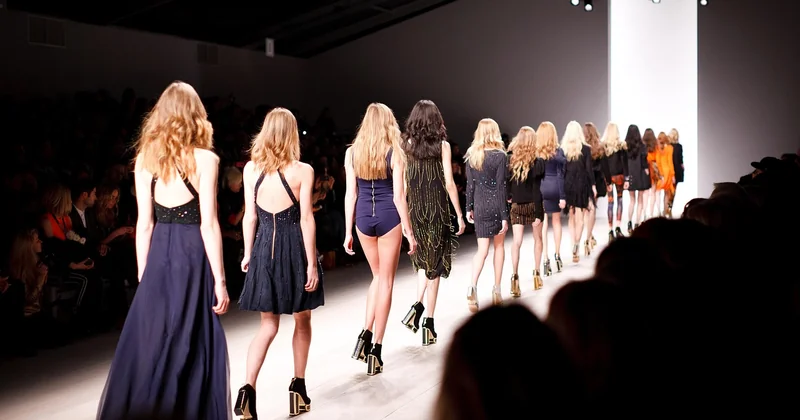
What are the major fashion weeks around the world?
The majors are still the four you already know, plus one that has quietly earned its place at the table. Here's how they stack up against the emerging tier, using the metrics I actually track when advising a brand.
| Week | Tier | Typical brand count on calendar | Buyer presence | Realistic cost for a small label |
|---|---|---|---|---|
| Paris | Big Four | 80–100 | Very high | €40,000–€150,000 |
| Milan | Big Four | 60–80 | Very high | €35,000–€120,000 |
| New York | Big Four | 70–90 | High | €30,000–€100,000 |
| London | Big Four | 50–70 | High | €25,000–€90,000 |
| Copenhagen | Bridge | 30–40 | Medium-high | €12,000–€35,000 |
| Tbilisi / Lagos / São Paulo | Emerging | 15–35 | Medium | €3,000–€15,000 |
The cost column is the one that surprises people. And the numbers above are my own ranges from talking to designers and production houses over the past couple of seasons, not a published index — treat them as orders of magnitude, not quotes.
The bridge week nobody talks about
Copenhagen deserves its own paragraph because it's the smartest first step for a European label. You get genuine international press, a well-organised venue, and a schedule that doesn't require you to compete with a heritage house that's been showing for sixty years. It's expensive enough to hurt and cheap enough to survive.
What are the fashion week dates in 2026?
The Spring/Summer 2027 womenswear season is the one running through the back half of 2026, and the September cluster is where the calendar gets dense. Here's the shape of it as I understand it going into the season.
- New York: early-to-mid September 2026, roughly a five-day run
- London: the days immediately following New York, again about five days
- Milan: late September 2026, six days
- Paris: late September into early October 2026, just over a week
- Copenhagen: early August 2026, ahead of the September block
- Miami: mid-October 2026, the swim and resort circuit
Two things to keep in mind if you're planning travel around these. First, dates shift by a few days most seasons as venues and sponsor commitments settle, so book flights late or book refundable. Second, the emerging weeks deliberately avoid the September crush — Tbilisi, Lagos and São Paulo tend to space themselves out across the rest of the year so they aren't competing for the same buyers in the same fortnight.
That spacing is not accidental. It's smart scheduling by organisers who understand that a buyer with a fixed travel budget will pick Paris over Tbilisi every single time if they're on the same week.
Which is the biggest fashion week in the world?
Paris. It isn't close, and anyone telling you otherwise is selling something.
The reason isn't just prestige. Paris concentrates the entire commercial infrastructure of the industry in one city for one week: the conglomerates are headquartered there, the biggest showrooms operate there, the most influential buyers make their decisions there, and the press corps that actually moves the needle all fly in. Milan is a strong second. New York has the cultural weight but has lost some of its wholesale gravity over the past decade, and London functions partly as a talent pipeline toward Paris rather than a commercial endpoint.
Which brings up an obvious problem for emerging weeks: if Paris is where the money is, why bother with anywhere else? Because the money in Paris is looking for a specific kind of brand, and if you don't fit that mould, you're paying six figures to be politely ignored.
What are the current fashion trends around the world?
Trends don't travel evenly, and the gap between what's showing in Paris and what's showing in Lagos is where a lot of interesting work is happening right now.
What I'm seeing on the ground
Across the emerging circuit, the through-line I keep noticing is material specificity. Designers are leaning hard into regional fibres and local craft techniques — hand-dyed cotton,再生 woven textiles, leatherwork traditions that have been in families for generations — and building a commercial identity around them rather than chasing a global silhouette.
This is a genuine shift from a few years ago, when emerging-week designers were mostly imitating whatever Milan had done two seasons prior. Imitation gets you nowhere against a house with a hundred-year archive. Specificity gets you into a store that already has three minimalist Scandinavian labels and doesn't need a fourth.
The other pattern: emerging weeks are much more comfortable with direct-to-consumer than the Big Four. Several labels I follow launch a capsule collection the week of their presentation and sell it online the same day. No wholesale margin, no waiting six months for a season to land in stores. It's a completely different business model and it suits a small operation.
Why this matters commercially
If you're a buyer, the emerging weeks are where you find a brand before it gets expensive. Three seasons ago, a designer showing in Tbilisi had wholesale prices that a mid-size boutique could actually afford. That same designer now shows in Copenhagen at roughly triple the price. The arbitrage window is real and it closes fast.
A note on my own mistakes here
Early on, I dismissed the emerging circuit entirely, on the assumption that if a week mattered, I'd already know about it. That was lazy reasoning, and it cost me the chance to work with two brands before they got picked up by larger distributors. I also overcorrected for a while and recommended an emerging week to a label whose product was genuinely too niche for the buyers in attendance. The lesson wasn't "emerging weeks are better." It was "match the week to the buyer, not the other way around."
How to choose your week
Start with your buyer, not your calendar. If your target stockists are in Europe, Copenhagen or Tbilisi will get you further than Lagos. If you're building a regional base in West Africa, Lagos Fashion Week is not a stepping stone to somewhere else — it's the main event.
Then ask the uncomfortable question: can you afford to show, or can you afford to attend? Plenty of brands get nearly the same commercial result from a well-positioned showroom appointment during an emerging week as they would from a runway slot. The runway buys attention. The showroom buys orders. Most small labels need orders more.
And if you're a designer reading this and your instinct is to go to Paris anyway, because Paris is Paris — I understand. I really do. Just make sure you've done the maths on what six figures of show budget returns for a brand with no existing wholesale presence. Usually, the answer is: not much.
The part that lingers
The fashion week system looks like a hierarchy from the outside — Paris at the top, everything else arranged below it in descending order of importance. From the inside, it looks more like a set of separate markets that happen to share a format.
Which means the real question isn't "which fashion week is the biggest." It's "which room contains the people who will actually buy what I make." Those are different questions, and the second one has a much better answer than Paris for a surprising number of brands.
My friend in Antwerp found her room in Tbilisi. Yours might be in Lagos, or Seoul, or a showroom in Mexico City during a week you've never heard of. The only way to find out is to stop treating the emerging circuit as the minor leagues and start treating it as what it is: a market nobody else has crowded yet.