You're holding a cashmere scarf in a shop and the label says "100% cashmere." The price says €480. The question nobody behind the counter wants to answer directly: how do you actually know? Not from the label, and not from the price either. I've stood in enough boutiques watching a sales assistant's face change when I flipped a hem inside out to know that the answer lives in about six places on any garment, and most of them are on the inside.
This guide is about how to identify luxury fashion craftsmanship details — the physical, checkable marks that separate a well-made piece from an expensive one. No brand worship, no "you can just feel it." Just the things you can look at, count, and test.
Key Takeaways
- Stitching density, symmetry, and the way a seam is finished tell you more than any label.
- Natural fibres behave a certain way when you handle them; synthetic blends reveal themselves quickly.
- Buttons, buttonholes, linings, and zippers are the cheapest places to cut corners, so they're the most revealing.
- Match patterns at the seams and check how the fabric is cut — it's one of the clearest signs of care.
- Price correlates with craft, but it is not the same thing. A €300 jacket can beat a €1,200 one on construction.
How to identify luxury craftsmanship in stitching
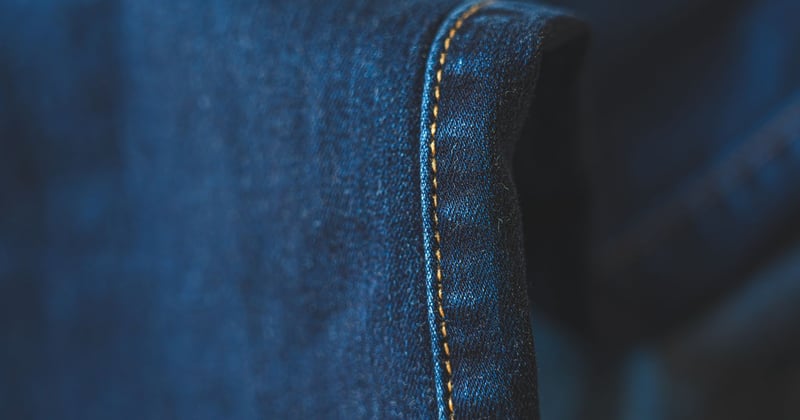
Start with the inside of a hem. Turn the garment over and look at the seam allowance — the raw fabric edge hidden inside. On a fast-fashion piece you'll usually see a serged overlock stitch, a chain of loops that looks like a tiny braid. That's cheap and fast. On a well-made garment you're more likely to find a French seam, a flat-felled seam on denim, or a bound seam wrapped in tape.
Stitch density: what to count
Pick up the piece and put your thumb on a straight seam. Count the stitches in one inch. Mass-market tailoring often runs 8 to 10 stitches per inch — fast to sew, easy to pull apart. Better garment construction typically sits higher, and a jacket shoulder or a shirt placket set by a skilled machinist will look dense and even, with no wandering line. With hand-sewn work, minor irregularity is normal and actually a good sign: a machine stitches identically every time, a person doesn't.
Symmetry and the line of the seam
Hold the garment up at arm's length and look at the seam. Does it curve evenly, or does it wobble? A seam that puckers on one side and lies flat on the other means someone sewed too fast or didn't pin properly. On a tailored jacket, check that the two front panels mirror each other: lapel width, pocket placement, the distance from the shoulder seam to the sleeve head.
The catch? A perfectly straight seam is easy to fake with stiff interfacing, so pair this with a feel test — more on that below.
Finishing details people forget
- Look at where the seam ends on a sleeve — is it clean, or does it fray into the armhole?
- Check the back of a buttonhole. Machine-cut holes with no reinforcement tend to fray within a season.
- Hand-picked buttonholes look slightly irregular, with a small knot at one end.
- Turn a pocket inside out — the lining should be sewn, not glued or fused.
Reading the fabric: the tests that actually work
Labels lie less than people think, but they're not the whole story. A wool coat labelled "wool" can be 100% wool or a blend with a lot of polyester. You can usually tell the difference in three seconds.
The hand test
Crumple a corner of the fabric in your palm and release it. Wool and linen spring back with texture. Polyester stays creased or feels slick and slightly stiff. Cashmere feels soft and a little "cloudy" between your fingers — if it feels smooth and slippery like nylon, it probably is.
The burn test (for loose fibres)
If you have a loose thread from a hem, hold it with tweezers over a flame — outdoors, and away from anything flammable. Natural fibres smell like burnt hair or paper and crumble to ash. Synthetics melt into a hard bead and smell chemical. Do this only on a scrap, never on the garment itself.
Leather: what to look for
On a leather bag or jacket, check the grain. Good leather has a slight variation in the surface — no two panels look identical. Look at the edge of a strap: is it painted, or is it skived and folded? Painted edges crack. Folded and stitched edges last. The smell of vegetable-tanned leather is warm and earthy; chrome-tanned leather often smells flat or slightly chemical.
What is the 3-3-3 rule for fashion?
The 3-3-3 rule is a wardrobe-building guideline: buy pieces you'll wear for three years, in three different ways, and can justify spending three figures on. It's not a law, and it's not a stitching test — it's a mental filter for deciding whether a garment earns its place in your closet.
The logic is simple. If you can name three distinct outfits it works with, and you genuinely expect to wear it for at least three years, the cost per wear drops fast. A €250 jacket worn twice a week for three years costs you pennies per wear. A €60 trend piece worn four times costs far more in practice. In my experience, that math is the honest one, and it's the reason I own fewer pieces than I did a decade ago.
What are the characteristics of well-made fashion?
Beyond stitches and fabric, well-made garments share a handful of structural traits. You can check all of them in under two minutes once you know what to look for.
- Pattern matching at the seams — stripes, checks, and prints line up on both sides of a closure.
- Cut on the grain — pull the fabric gently along the length and width; the piece should hang straight, not twist.
- Interfacing that behaves — a lapel should roll softly, not sit flat and stiff like cardboard.
- Clean linings with a pleat or a small excess of fabric at the back, so the jacket doesn't tear when you sit.
- Zippers and buttons that feel solid and are sewn on with a shank (a small thread stalk underneath the button) so the fabric doesn't pucker.
- Symmetry across the whole garment — cuffs, shoulders, collar points.
- No loose threads, no glue marks, no visible fusing on the inside of a collar or lapel.
Here's a quick comparison that sums up where cheap and well-made garments usually differ:
| Detail | Mass-market construction | Well-made construction |
|---|---|---|
| Seam type | Serged overlock, exposed | French, flat-felled, or bound |
| Stitch density | Sparse, fast-set | Dense and even, hand- or machine-set |
| Buttonholes | Machine-cut, unreinforced | Reinforced or hand-finished |
| Lining | Glued or fused | Sewn in with a pleat or movement allowance |
| Leather edges | Painted, cracks with use | Skived and folded, stitched |
| Pattern matching | Often mismatched at seams | Aligned across closures |
What clothing brands are actually high quality?
There's no single list, and I'd be suspicious of anyone who gives you one. Quality varies by garment category within the same brand — a label known for excellent tailoring may produce mediocre knitwear, and a small workshop producing exceptional leather goods might outsource its cotton shirts.
What you can do is check the maker, not the brand:
- Look for a country of origin printed on an inside label, and read it as a hint, not a guarantee.
- Search the brand's website for its atelier or manufacturing partners. Some publish their suppliers; many don't.
- Check whether the brand offers repairs or alterations — that's a signal the piece is meant to last.
- Visit the store and turn a garment inside out. Staff reactions are informative.
Independent, family-run workshops and small ateliers — in Florence, in northern Portugal, in parts of Scotland for knitwear — are often worth seeking out for specific categories. But even there, use the checks above. Reputation doesn't sew a seam.
What makes a product luxury?
Luxury isn't a price band or a logo. In my experience it comes down to three things that are hard to fake and hard to rush: materials that age well, construction that holds up, and a maker who could repair it if it didn't.
Materials that age well look better in year five than in week one. Construction that holds up survives a wash, a season, and a bad day. And repair matters more than people realise — the difference between a piece that gets thrown away and a piece that gets handed down.
The tactile factor
Weigh a garment in your hand. Good fabric has drape and heft — it moves with you and doesn't feel flimsy. This is why I always tell people to touch before they buy online: reading reviews is fine, but the fabric you actually hold is the one that tells the truth.
The restraint factor
Luxury is often quiet. Considered details — a slightly angled seam, a pocket placed at hip height rather than mid-thigh, a coat with just enough fabric to swing. Restraint shows up as consistency; nothing on the garment looks like it was added to justify the price.
A quick practical checklist before you buy
Run through this in the fitting room. It takes two minutes and will save you more than any return.
- Turn the hem inside out and check the seam. Serged = mass-market; French or bound = better.
- Count stitches in one inch of a straight seam. Under ten is a warning.
- Look at the buttonholes on the inside. Reinforced or hand-finished is better than bare machine-cut.
- Find the lining. Is it sewn in, or bonded? Look for a small pleat at the back.
- Match the pattern across the closure. If it doesn't line up, the maker didn't care.
- Feel the fabric. Crumple it, release it, and watch how it recovers.
- Ask about repairs and alterations. A maker who'll fix it wants it to last.
None of these checks are perfect. A garment can pass all seven and still disappoint you a year later; a piece can fail one and still be the best thing in your wardrobe. But they stack. The more you look inside, the harder it becomes to be tricked by a price tag or a familiar logo.
The most useful habit I picked up from a tailor years ago wasn't about stitching at all. He said: look at the inside of the garment, and the outside will tell you the truth. That single move — flip the hem, find the lining, read the buttonhole — is where the whole question of luxury fashion craftsmanship quietly answers itself. The rest is marketing.